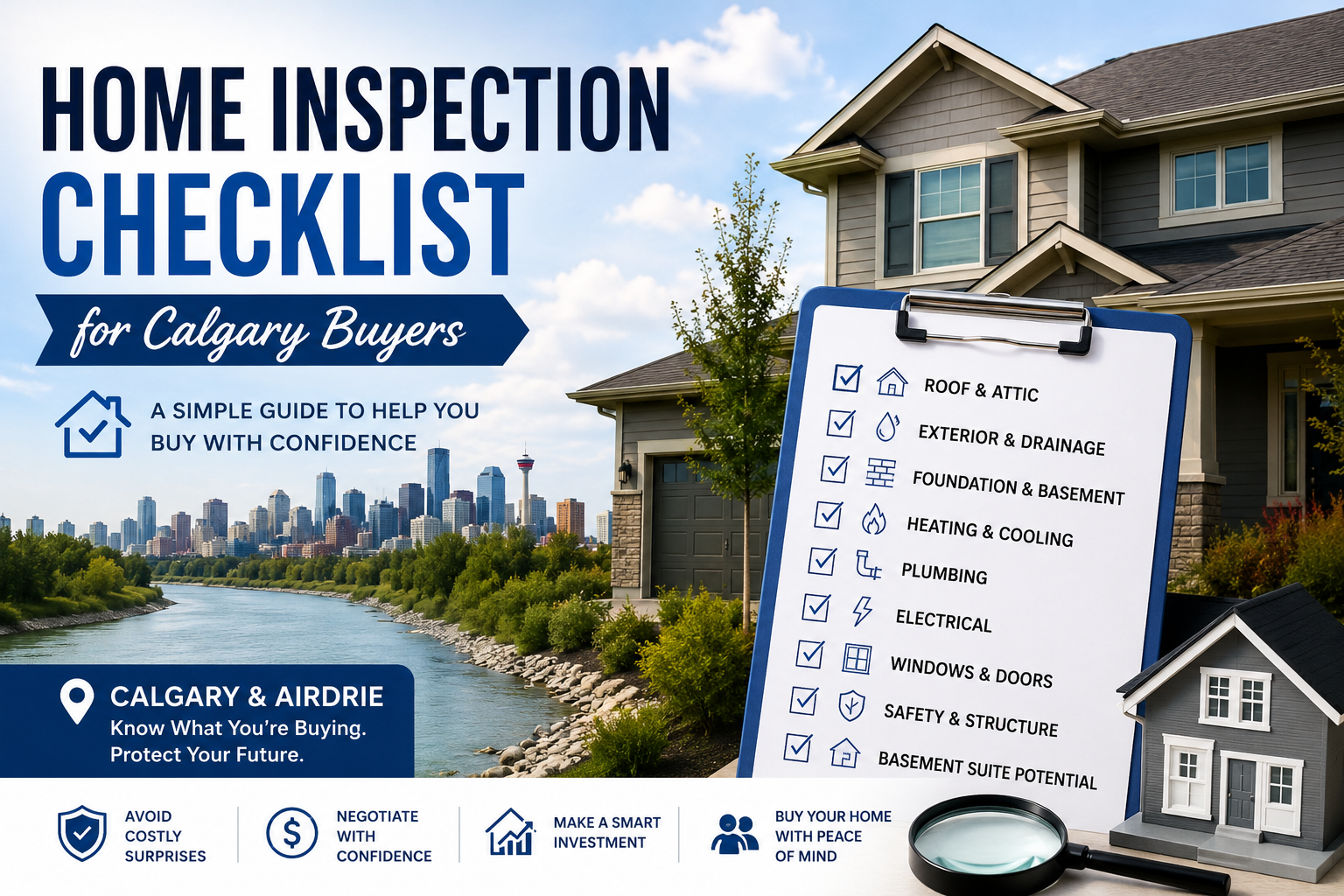
Home Inspection Checklist for Calgary Buyers
Buying a home in Calgary is exciting, but before you remove your conditions, you need to understand what you are actually buying.
A house can look beautiful in pictures. It can have fresh paint, nice flooring, a renovated kitchen, and good staging.
But a home inspection helps you look beyond the surface.
It gives you a better understanding of the roof, furnace, plumbing, electrical, foundation, basement, grading, windows, and other important parts of the home.
For Calgary buyers, this step is very important because our weather can be hard on homes. Snow, hail, freeze-thaw cycles, moisture, and older building materials can all create issues over time.
A home inspection does not mean the house has to be perfect.
No house is perfect.
The goal is to understand the condition of the home, the possible repair costs, and whether the property still makes sense before you move forward.
🏠 Why a Home Inspection Matters
A home inspection helps buyers make a more informed decision.
When you are buying a home, especially as a first-time buyer, it is easy to focus on the things you can see right away:
- The kitchen
- The flooring
- The paint
- The layout
- The overall look and feel of the home
But the expensive issues are often the things you cannot fully see during a regular showing.
A proper inspection can help identify concerns with major systems and give you a better idea of what repairs may be needed now or later.
This can help you decide whether to:
- ✅ Move forward with the purchase
- 🛠️ Ask the seller to fix something
- 💰 Negotiate the price or terms
- ⚠️ Walk away if the risk is too high
The goal is not to scare you.
The goal is to protect you from surprises.
🔍 What a Home Inspector Usually Looks At
A home inspector usually reviews the visible and accessible parts of the home.
This can include:
- 🏠 Roof and exterior
- 🌧️ Gutters, drainage, and grading
- 🧱 Foundation and basement
- 🔥 Furnace and heating system
- 💧 Plumbing and water heater
- ⚡ Electrical panel and wiring
- 🪟 Windows and doors
- 🧊 Attic insulation and ventilation
- 🚪 Garage and exterior structures
- 🛠️ Safety concerns and visible defects
A home inspection is usually visual and non-invasive. The inspector will not open walls, remove flooring, or guarantee that nothing will ever go wrong.
But they can help you understand the condition of the home based on what is visible and accessible during the inspection.
🏚️ Exterior Checklist
The outside of the home is very important in Calgary because water, snow, and grading issues can create expensive problems.
Before removing conditions, buyers should pay close attention to:
- 🏠 Roof condition and missing or damaged shingles
- 🌨️ Signs of hail damage
- 🌧️ Gutters and downspouts
- 📉 Grading around the house
- 💧 Water draining toward or away from the foundation
- 🧱 Cracks in exterior walls or foundation
- 🚪 Exterior doors and weather sealing
- 🪟 Window condition and signs of moisture
- 🧊 Ice damming signs near roof edges
- 🪵 Decks, railings, stairs, and balconies
One thing I always like to look at is where the water goes.
If the grading slopes toward the house, or downspouts are dumping water near the foundation, that can become a basement moisture problem later.
🏠 Roof and Attic Checklist
Calgary weather can be tough on roofs.
Hail, wind, snow, and temperature changes can wear down shingles and roof components over time.
During the inspection, pay attention to:
- 🏠 Age and condition of shingles
- 🌨️ Hail damage or missing shingles
- 💧 Signs of roof leaks
- 🧊 Attic frost or moisture
- 🌬️ Attic ventilation
- 🧱 Insulation levels
- 🔥 Bathroom fan venting into the attic instead of outside
A roof does not have to be new, but you should know if it may need replacement soon.
Roof replacement can be a major cost, so it is better to know before you remove conditions.
🔥 Furnace, Water Heater, and Mechanical Systems
The furnace and water heater are important because they affect comfort, safety, and future repair costs.
In Calgary, heating is not something you want to ignore.
Ask about:
- 🔥 Age of the furnace
- 🧾 Service history
- 🌬️ Airflow and heating performance
- 💧 Age of the hot water tank
- ⚠️ Signs of rust, leaks, or poor installation
- 🧊 Humidifier condition
- 🌡️ Thermostat and heating controls
If the furnace or water heater is near the end of its life, that does not always mean you should walk away.
But you should include that cost in your numbers.
💧 Plumbing Checklist
Plumbing issues can be expensive if they are missed.
During the inspection, buyers should check:
- 💧 Water pressure
- 🚿 Drainage speed in sinks, tubs, and showers
- 🚽 Toilets flushing properly
- 🧱 Visible leaks under sinks
- 🔧 Pipe material
- ⚠️ Poly-B plumbing concerns
- 💦 Signs of past water damage
- 🧺 Laundry plumbing setup
In some older Calgary homes, buyers may come across Poly-B plumbing. This is something you want to understand before buying because it can affect insurance, future repairs, and replacement costs.
If the inspector flags a plumbing concern, it may be smart to get a plumber’s opinion before removing conditions.
⚡ Electrical Checklist
Electrical issues are not something to guess on.
During the inspection, buyers should pay attention to:
- ⚡ Electrical panel condition
- 🔌 Breakers and panel capacity
- 🧯 Aluminum wiring concerns
- 🔦 GFCI outlets in kitchens, bathrooms, and exterior areas
- 💡 Light switches and outlets working properly
- 🛠️ Signs of DIY electrical work
- 🔥 Safety concerns or overheating signs
If there are concerns with the electrical panel, wiring, or DIY work, get advice from a qualified electrician.
Electrical problems can affect safety, insurance, and renovation plans.
🧱 Foundation and Basement Checklist
The basement is one of the most important areas to inspect, especially if you are buying a home with basement suite potential.
Look for:
- 🧱 Foundation cracks
- 💧 Moisture or water stains
- 🦠 Musty smell
- 📉 Uneven floors
- 🪟 Window size and condition
- 🚪 Separate entrance potential
- 📏 Ceiling height
- 🔥 Mechanical room layout
- 🛠️ Signs of unpermitted renovations
Basement moisture is a big one.
Sometimes a basement looks finished and clean, but there may still be signs of past water problems.
Do not ignore smells, stains, soft flooring, or fresh paint in suspicious areas.
🏡 Basement Suite Potential Checklist
If you are buying a home in Calgary because of basement suite potential, the inspection becomes even more important.
You should look at:
- 🚪 Is there a separate entrance?
- 🪟 Are the windows suitable for bedrooms?
- 📏 Is the ceiling height practical?
- 🔥 Can proper safety requirements be met?
- 🚗 Is there enough parking?
- 🔧 Is the mechanical room layout workable?
- 💧 Are there signs of water issues?
- 📄 Were basement renovations permitted?
A basement suite can be a great way to create rental income, but the numbers only work if the property can be improved safely and properly.
If the basement layout is poor or the renovation cost is too high, the property may not be the right fit.
🛠️ Renovation and Permit Gaps
Many Calgary homes have had renovations done over the years.
Some are done properly.
Some are not.
During the inspection, pay attention to signs of:
- 🛠️ DIY basement development
- ⚡ DIY electrical work
- 💧 Poor plumbing work
- 🚪 Bedrooms without proper windows
- 🔥 Missing smoke or carbon monoxide protection
- 📄 Renovations with no permit history
Not every unpermitted item is a deal breaker, but you need to understand what you are taking on.
If a property has a finished basement, secondary suite, deck, garage, or major renovation, ask questions about permits and inspections.
👀 Things Buyers Should Watch During the Inspection
If possible, attend the inspection.
This gives you a chance to ask questions and understand the home better.
Do not just wait for the report.
Walk around with the inspector and pay attention to:
- 🔍 Major issues vs minor issues
- 💰 Repairs that may be expensive
- ⏳ Items that may need replacement soon
- 🛠️ Maintenance items you can handle later
- ⚠️ Safety concerns
- 📄 Items that need a specialist’s opinion
Every inspection report will have a lot of items.
Do not panic just because the report is long.
The key is understanding which issues are normal maintenance and which ones can affect value, safety, financing, insurance, or your renovation plans.
📋 Questions to Ask After the Home Inspection
After the inspection, do not just ask, “Is the house good or bad?”
Ask better questions.
- ❓ What are the biggest concerns?
- ❓ Are any issues safety-related?
- ❓ What needs attention right away?
- ❓ What can wait?
- ❓ Should we get a roofer, plumber, electrician, or foundation specialist to review anything?
- ❓ Does this change the value of the property?
- ❓ Does this affect my renovation or basement suite plan?
- ❓ Should we negotiate repairs, price, or terms?
These questions help you make a better decision instead of reacting emotionally.
⚠️ Do Not Expect a Perfect Inspection
This is important.
No home inspection is perfect.
Even newer homes can have issues.
Older homes will almost always have some maintenance items.
The goal is not to find a house with zero problems.
The goal is to understand the problems before you buy.
There is a big difference between a small maintenance item and a major issue that changes the deal.
💰 How to Use the Inspection in Negotiation
If the inspection finds issues, you may have a few options depending on your contract, timing, market conditions, and what the seller is willing to do.
You may be able to:
- 🛠️ Ask the seller to repair something
- 💰 Ask for a price reduction
- 📄 Ask for a credit or adjustment
- ⏳ Extend the condition period if more review is needed
- 🚶 Walk away if the concern is too serious
This is where having a good real estate agent matters.
You need someone who can help you understand what is normal, what is serious, and what is worth negotiating.
✅ Quick Home Inspection Checklist for Calgary Buyers
Here is a simple checklist you can keep in mind before removing your inspection condition:
- ✅ Roof condition reviewed
- ✅ Attic checked for moisture and ventilation
- ✅ Furnace age and condition reviewed
- ✅ Hot water tank checked
- ✅ Electrical panel reviewed
- ✅ Plumbing checked for leaks or older materials
- ✅ Foundation and basement checked for moisture
- ✅ Grading and drainage reviewed
- ✅ Windows and doors checked
- ✅ Decks, stairs, and railings reviewed
- ✅ Signs of DIY or unpermitted work noted
- ✅ Basement suite potential reviewed, if important
- ✅ Major concerns discussed with the inspector
- ✅ Repair costs considered before removing conditions
🏁 Final Thoughts
A home inspection is one of the most important steps when buying a home in Calgary.
It helps you understand the property beyond the photos, staging, and first impression.
For first-time buyers, it can also give peace of mind before making one of the biggest financial decisions of your life.
The inspection does not have to scare you away from every house.
It should help you buy with your eyes open.
The right home, at the right price, with the right information, can still be a great purchase even if it needs some work.
But you need to know what you are buying before you remove conditions.
📞 Buying a Home in Calgary or Airdrie?
As a real estate agent and investor, I like helping buyers look at homes in a practical way.
Not just the pictures.
Not just the listing price.
I help you look at the full picture, including:
- 🏠 Home condition
- 🛠️ Renovation potential
- 💰 Repair costs
- 📍 Location and resale value
- 🏡 Basement suite potential
- 📈 Long-term investment value
If you are thinking about buying a home in Calgary or Airdrie, feel free to reach out. I would be happy to help you review the property and understand the numbers before you make a decision.
Homes By Tarun
Leave a Reply